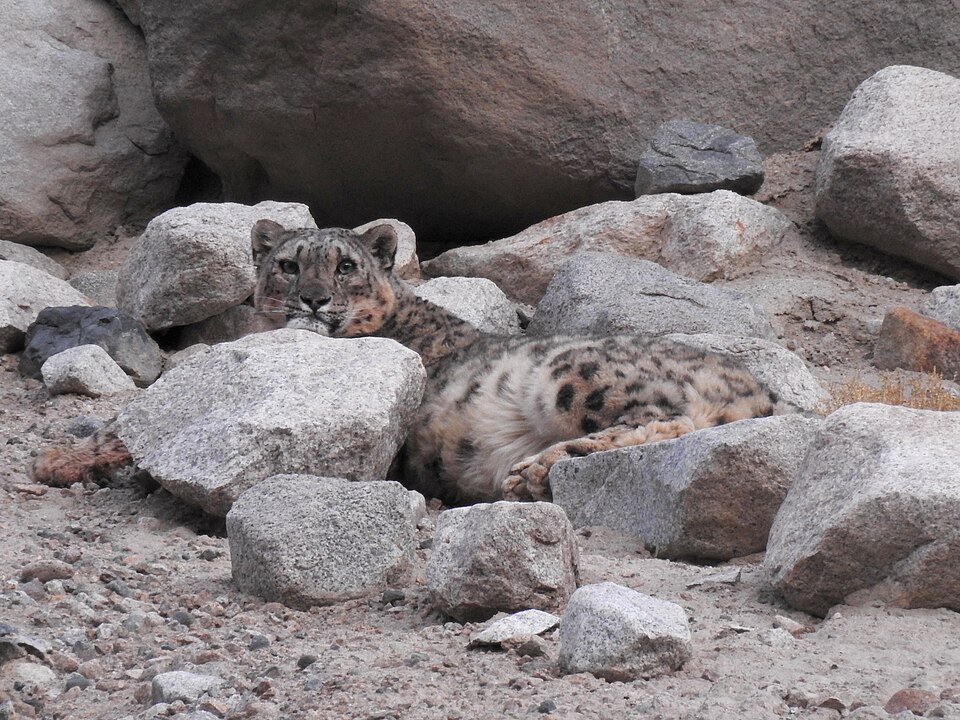
Wildlife safaris in Ladakh are opening up a new dimension of Himalayan travel, combining snow leopard spotting and high-altitude exploration with regulated tourism and community-led conservation.
Wildlife tourism is moving beyond the forests and grasslands traditionally associated with safaris, with the high-altitude wilderness of the Himalayas emerging as a new frontier. Wildlife safaris in Ladakh are set to offer travellers a different kind of encounter with nature following the launch of the region’s first Ladakh Snow Leopard Safari.
Lieutenant Governor Vinai Kumar Saxena flagged off six safari vehicles at Choglamsar Protected Forest in Leh during the Wildlife Week 2026 celebrations. Announced on 5 August 2026, the initiative was rolled out within two months and is being implemented by the Snow Leopard and High-Altitude Nature Conservation (SHAN) Society in collaboration with the Department of Forest, Ecology and Environment, UT Ladakh.
The initial routes cover Rumbak, Shang and Uley, areas known for snow leopard sightings. Purpose-designed open-back vehicles, trained local drivers and wildlife guides will facilitate excursions through the region’s rugged terrain. Additional routes are being explored across Hemis National Park, Changthang and Karakoram Wildlife Sanctuary, as well as Nubra, Zanskar, Sham, Kargil and Drass.
Wildlife Safari in Ladakh
Unlike conventional game drives, wildlife safari in Ladakh unfold in a high-altitude environment where spotting a snow leopard requires patience, local knowledge and an understanding of the landscape. The experience extends beyond the search for the elusive big cat, with dramatic mountain vistas and diverse wildlife adding to the appeal of guided nature excursions.
Ladakh is estimated to be home to 477 snow leopards, representing a substantial share of India’s estimated population of 718. Its biodiversity also includes more than 38 mammal species, over 340 bird species and approximately 1,800 vascular plant species.
The safari programme aims to address concerns associated with unregulated wildlife tourism, including illegal off-roading and disturbance to sensitive habitats. Approved routes, regulated visitor numbers and trained personnel are intended to minimise environmental impact while creating a structured framework for wildlife viewing.
At the launch, Saxena highlighted the need to balance conservation with local economic development, stating, “Wildlife should not be protected at the cost of people, nor should development come at the cost of wildlife. We must create a model in which both can thrive together.”
Connecting conservation with community livelihoods
A key objective of the initiative is to ensure that wildlife tourism creates economic opportunities for local residents. Beyond driving and guiding, communities could participate in nature interpretation, handicrafts and other enterprises linked to conservation.
As interest in wildlife safaris in Ladakh grows, supporting local expertise will be essential to delivering meaningful experiences while protecting the region’s fragile ecosystem. Twenty local youths are undergoing training in bird identification, birdwatching and wildlife spotting. They will receive binoculars, while birdwatching hides are planned at selected locations to support guided nature experiences.
Women-led enterprises also feature in the region’s conservation-linked livelihood efforts. The Wild Animal Felting Programme involves 50 women from Turtuk, Photoksar, Sangrah, Chushul and Shargole, drawing on traditional skills and locally sourced wool to develop products. Improved design, branding, market access and e-commerce have been identified as ways to help these businesses reach wider markets.
Other initiatives announced during Wildlife Week included funding for conservation education through Eco Clubs in 50 schools across Leh and Kargil, the inauguration of an AI-based human-wildlife conflict mitigation device developed by the Wildlife Division, Kargil, in collaboration with the University of Ladakh’s Kargil Campus, and the release of a documentary on the Himalayan brown bear. The second Ladakh Black-necked Crane Festival was also announced.
Building a responsible high-altitude safari experience
The introduction of wildlife safaris in Ladakh reflects a wider push towards high-value, low-impact and knowledge-based tourism. Managing visitor numbers, respecting wildlife habitats, controlling waste and limiting plastic pollution will be important as the region develops its wildlife tourism offering.
For travellers looking beyond established safari circuits, Ladakh presents a distinctly Himalayan experience shaped by altitude, challenging terrain and the expertise of local guides. The long-term success of the initiative will depend on maintaining a balance between visitor experiences, habitat protection and tangible benefits for the communities who share this remarkable landscape.